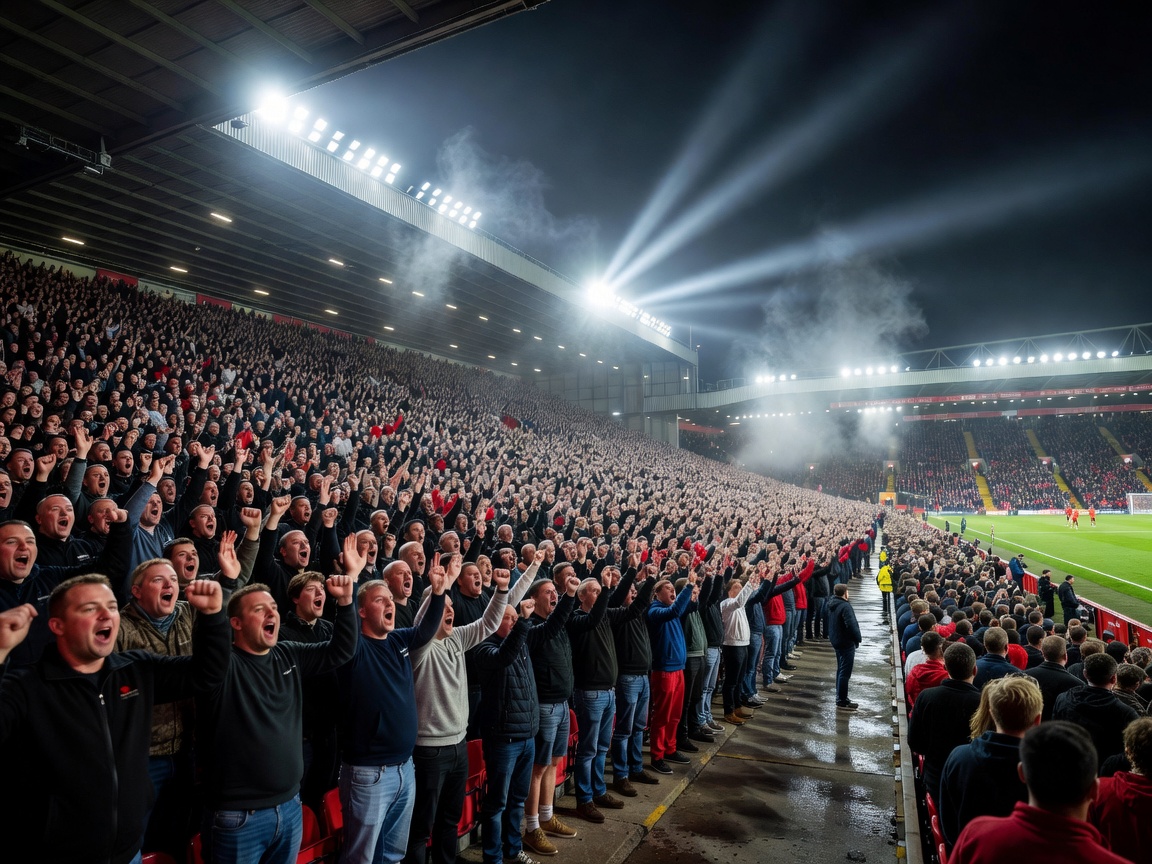
DISPATCH NO. 88: DOCUMENTING 130+ YEARS OF ENGLISH CATHEDRALS OF FOOTBALLFIELD OBSERVATION: ASTON • ANFIELD • HIGHBURY • OLD TRAFFORD • NEWCASTLE
Interactive 3D Floodlight Gantry & Pitch Geometry
Rain:Floodlights:
Great British Football Stadiums
From the red-brick gables designed by Archibald Leitch in the Victorian era to the towering steel cantilever bowls of the modern Premier League, this archive explores the sacred geometry and visceral matchday culture of English football grounds.
ARCHITECTURAL REPORT '26
Examining structural steel, turnstile heritage, and acoustic resonance across England's top tier grounds.
Featured Ground Dossiers
ARCHIVAL ENTRIES // STANDALONE SUB-PAGES
Liverpool Football ClubEstd. 1892
CAPACITY: 61,276
Anfield Stadium
Anfield Road, Liverpool L4 0TH
Home of the legendary Spion Kop terrace, Anfield fuses Archibald Leitch engineering roots with dramatic modern 21st-century main stand expansions.
English football grounds are singular in world sport because of their intense urban integration. Unlike American multi-purpose bowls or suburban continental arenas, Britain's classic stadiums grew organically within dense Victorian terrace street grids.
Floodlight pylons towered above two-up two-down chimneys, turnstiles opened directly off narrow residential pavements, and the smell of matchday frying onions mingled with cold northern rain. This architectural intimacy created unparalleled acoustic tension.
Archibald Leitch completes his first commission for the iconic Trinity Road Stand at Villa Park, introducing decorative red-brick façades and Dutch gables.
1906 — Anfield, Liverpool
The newly erected earthen banking at Anfield is officially christened the "Spion Kop" after the 1900 Boer War battle, defining terrace culture for a century.
1953 — Molineux & Highbury
Permanent floodlight pylons become ubiquitous, birthing dramatic mid-week European night fixtures under blinding industrial white beams.
1990 — The Taylor Report
The mandatory conversion to all-seater stadiums transforms English grounds, initiating the modern era of massive cantilever engineering.
Comparative Analytics
Capacity Index: England's Premier Cathedrals
A visual baseline of contemporary all-seater spectator volumes across prominent British football arenas.
Wembley Stadium (National)
90,000
Old Trafford (Man Utd)
74,310
Tottenham Hotspur Stadium
62,850
Anfield (Liverpool)
61,276
St James' Park (Newcastle)
52,305
Villa Park (Aston Villa)
42,640
Acoustic & Supporter Atmosphere Ratings
FIELD OBSERVATION METRICS
The Spion Kop
Anfield • Liverpool
9.8
Famous for sustained choral singing and deafening acoustic reverberation off the corrugated roof during European fixtures.
Privacy & Cookie Consent: We use essential and analytical cookies to ensure the proper functioning of our 3D spatial archives, measure stadium traffic data, and enhance your archival browsing experience. Review our Cookie Policy and Privacy Policy for complete details.